
What to Check Before You Buy a Custom Engagement Ring in Toronto
Custom jewelry in Toronto ranges from shopfront retailers to private studios. Prices vary, and many claims about design and making do not hold up under scrutiny. Since 2010 we have manufactured for well-known jewelry studios in the city. That work has given us a direct view of how most of these businesses operate behind the scenes. The following points are based on that experience.
“Designed in Toronto” and “Made by us in Toronto”
Most studios will say the ring was designed in Toronto. In practice the notes are often sent overseas or to a local third party so the store can reduce cost and speed up delivery. Even when a local designer creates the CAD, the person you speak with is usually not the person who made the file, and details are lost in the handoff.
The same pattern applies to “made by us in Toronto.” The ring may be made in the city, but it is rarely made by the studio selling it. Retailers typically use several local workshops and choose the fastest or cheapest option available. Once the job is passed between parties, the store collects the margin and the workshop completes the work under time pressure.
"Our workshop is at another location."
Retailers have the storefront. Studios have the consultation room. The workshop, they will tell you, is somewhere else. In most cases this means several external workshops they do not own, selected because the price is low. If you cannot see the bench, there is a reasonable chance the people you are speaking with have never made a ring.
"We have our own in-store jeweler."
Many retailers who sell ready-made stock say they have a jeweler on site. The claim is often true. The role is usually limited to repairing, sizing, and polishing imported pieces that arrive incomplete or damaged. The in-store goldsmith is not there to design and make a custom ring from start to finish.
"But it's handmade."
You examine the finished ring, something feels off, and the salesperson says it is handmade. The line is meant to turn a defect into a feature. Poor finishing is not a characteristic of handmade work. It is incomplete work.
Ask to see the finished ring under a loupe before you pay. If the store cannot or will not show you, that is useful information. Poor work hides at arm’s length. Under a loupe it does not.
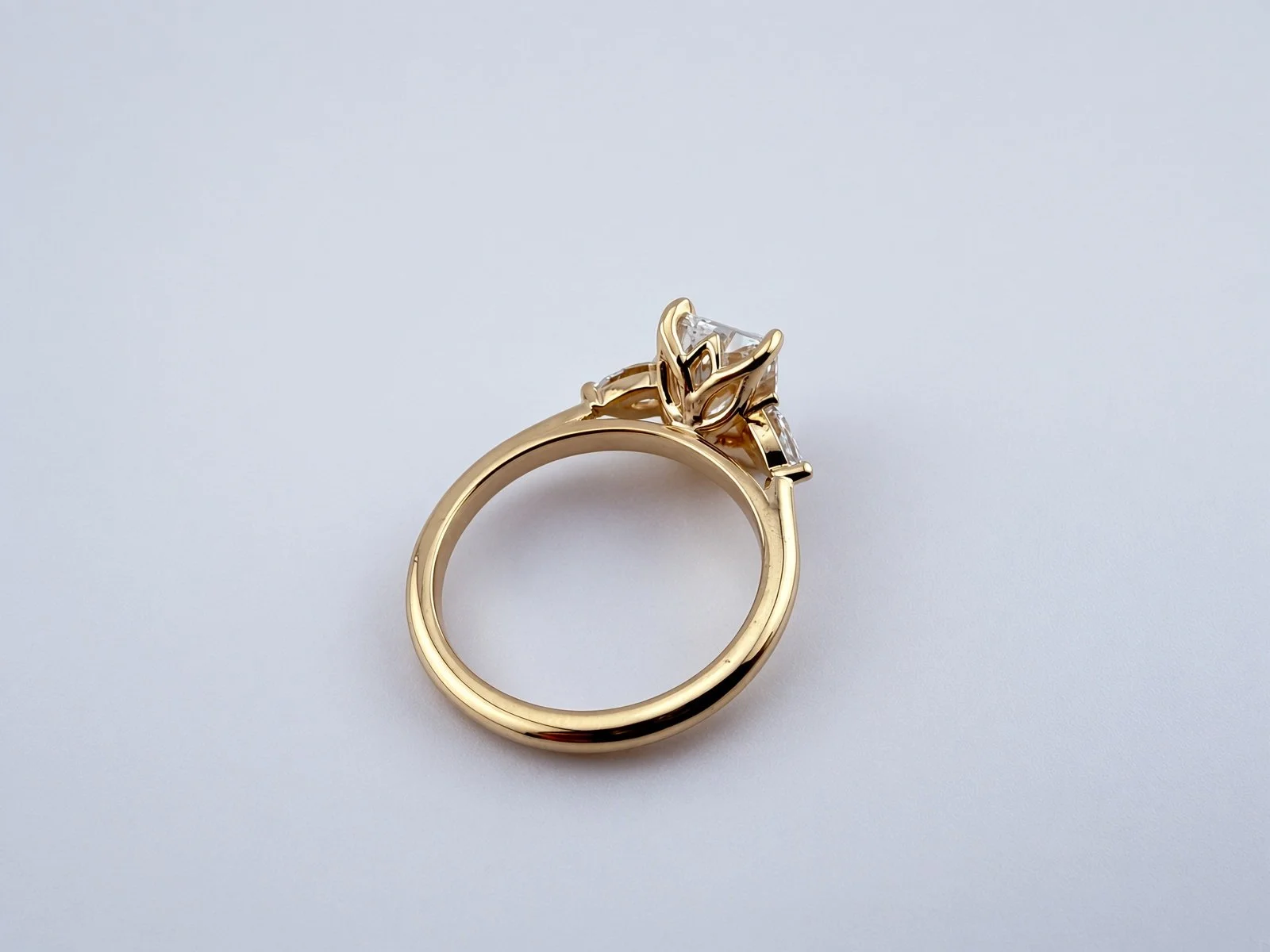
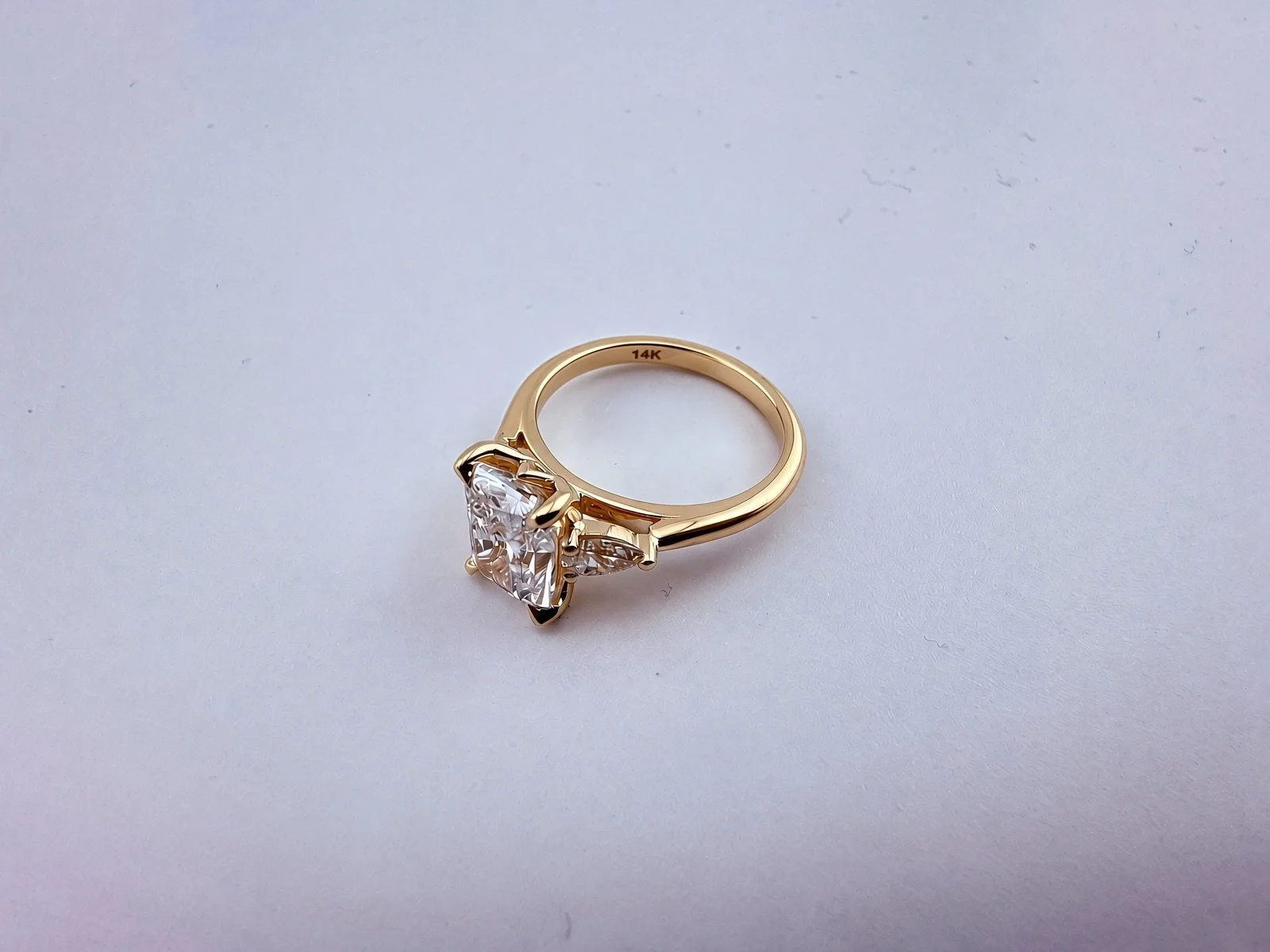
This ring looks sound from a normal viewing distance. The faults are not visible until the setting is examined up close.
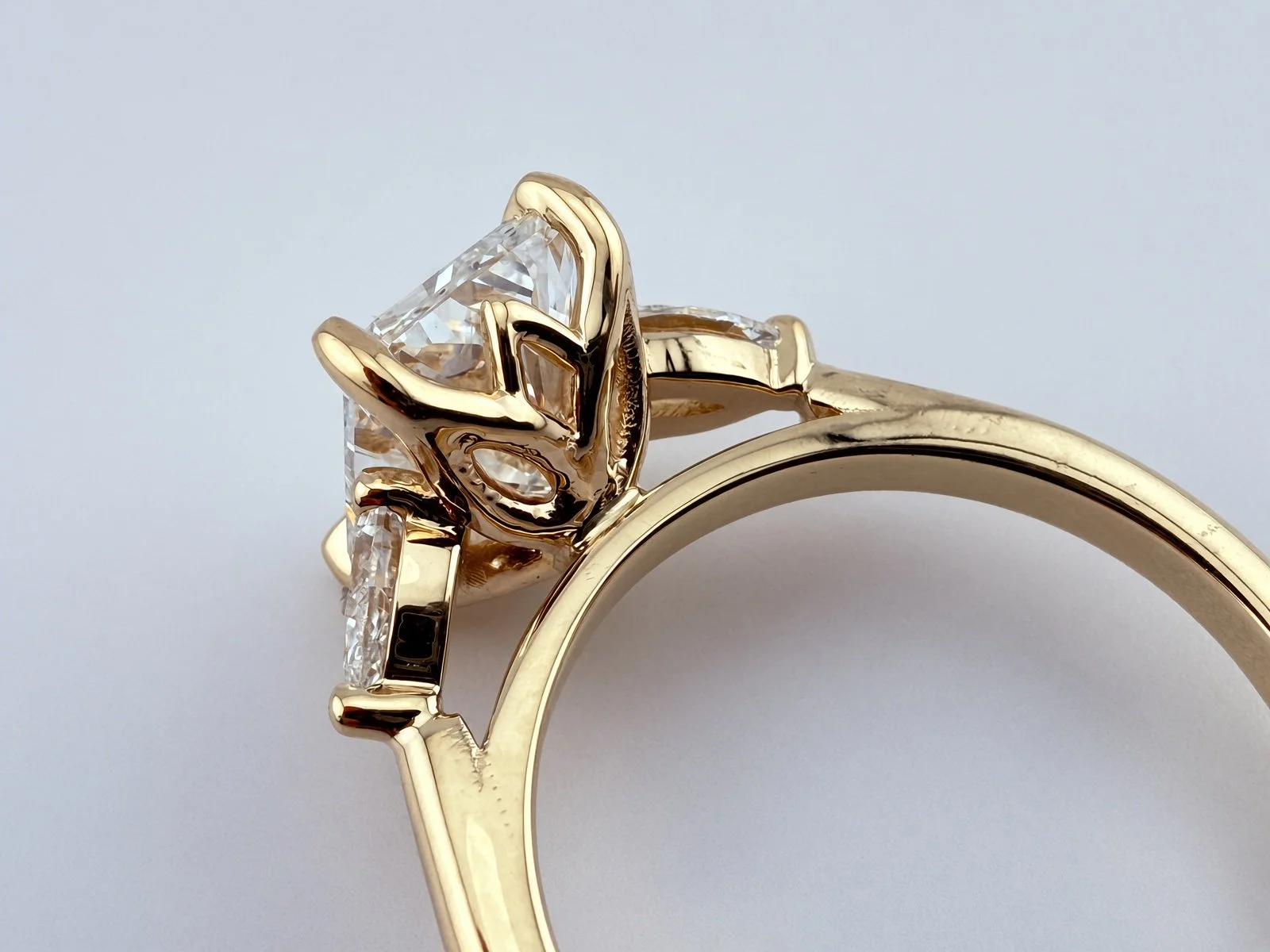
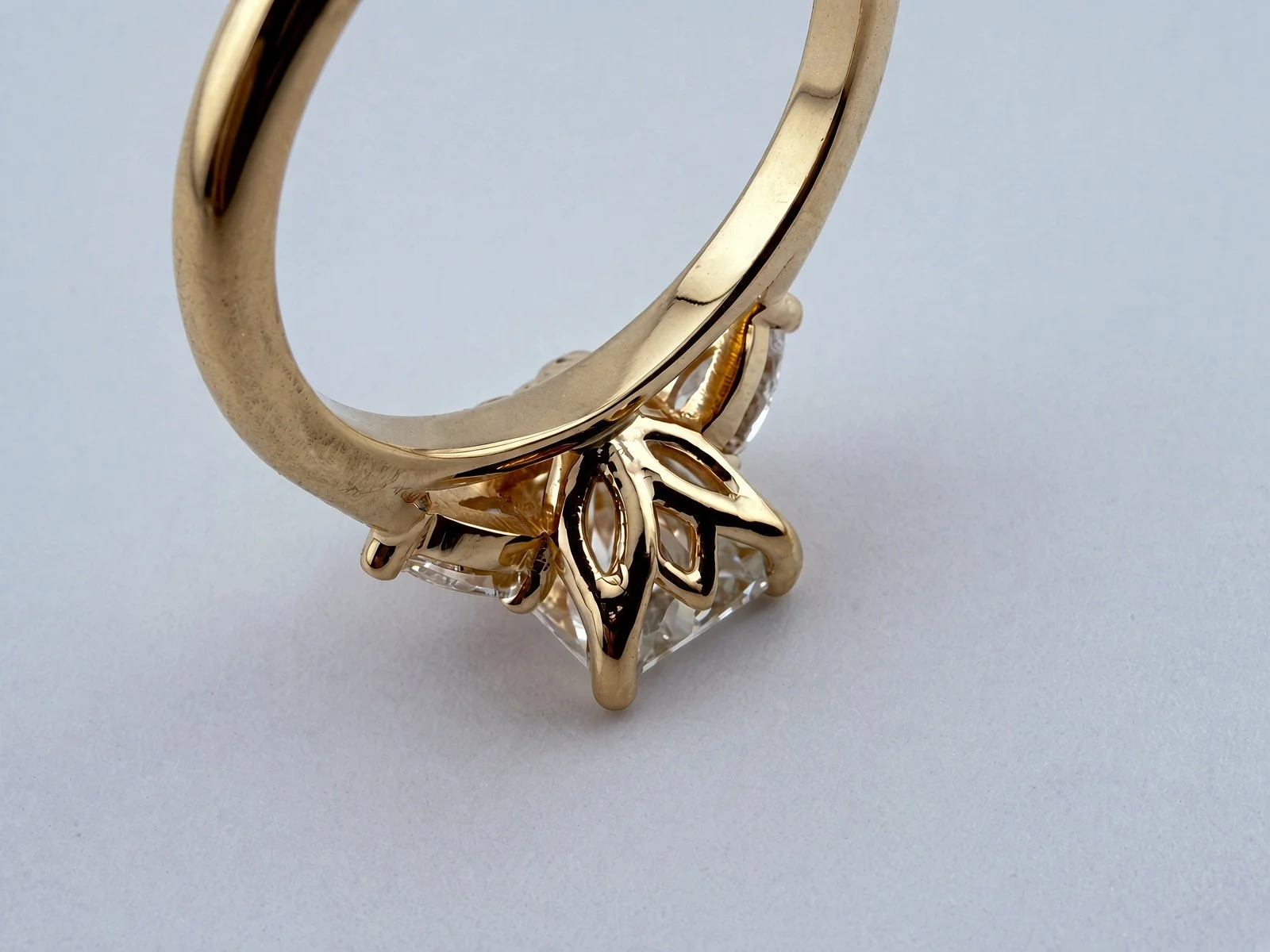
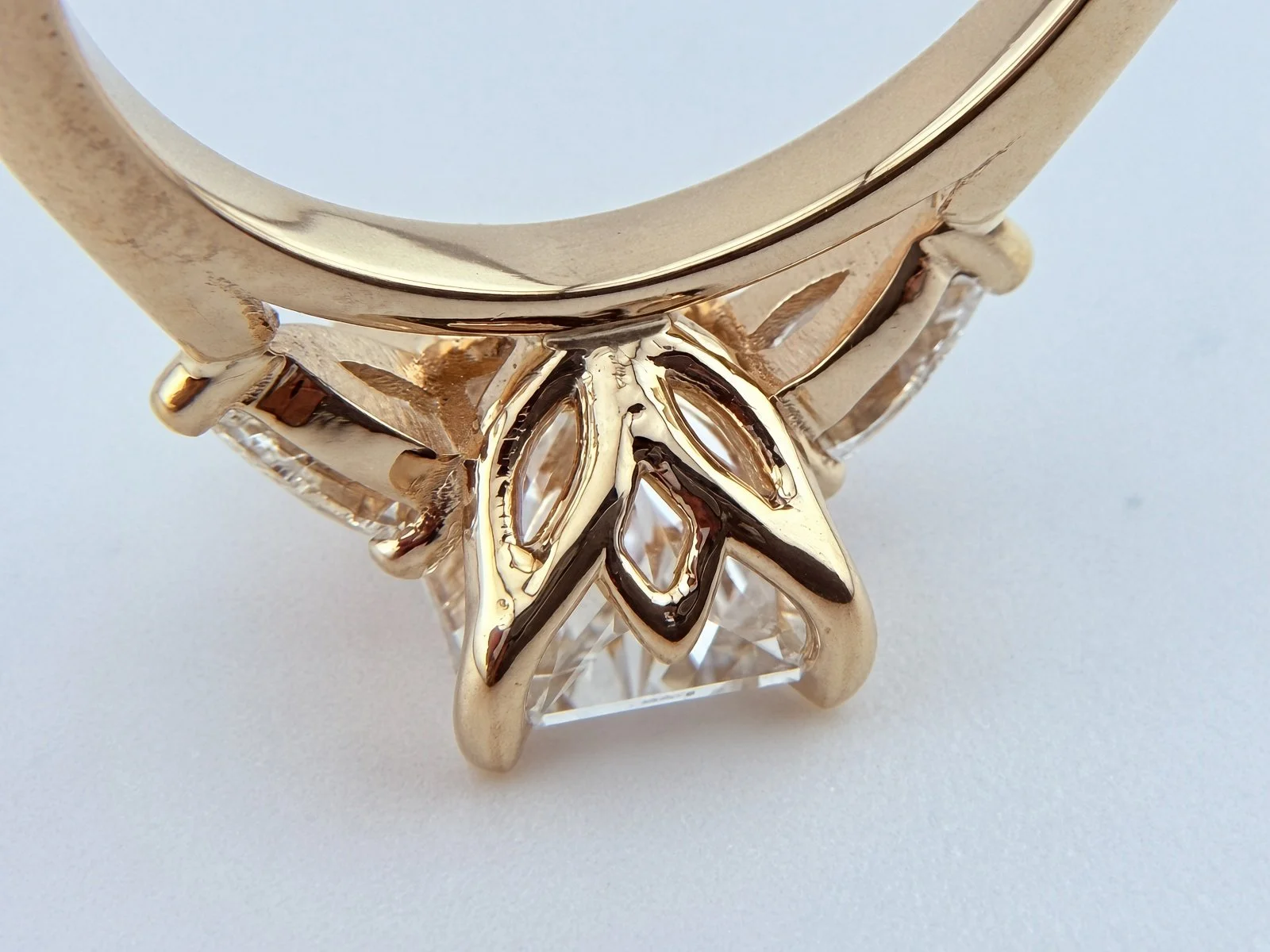
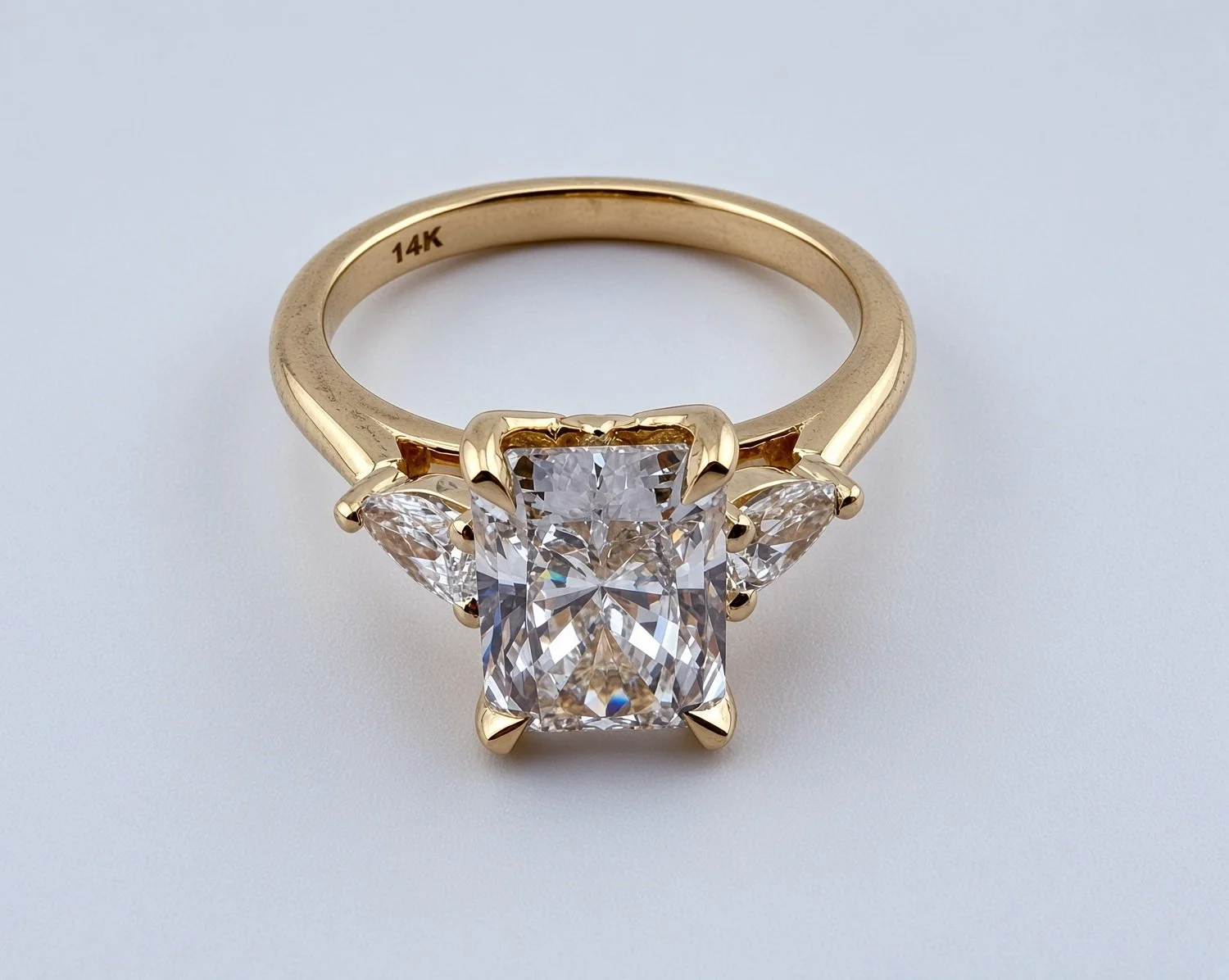
Under a loupe the faults become clear. There are stains and discoloration in the gold, and small pinholes that were not filled during finishing. The inside of the floral petals has not been cleaned or polished. The underside still shows casting lines, which means it was not finished either.
This is work that was left incomplete.
Look at what they post publicly
On the website or social media, is it the process or only the finished result? Studios that make the rings usually show the making. Resellers show the finished piece. If there is no evidence of the work itself, the ring is usually going to a third-party workshop
Questions to ask
Where is the ring designed?
Where is the ring made?
Can you show me that you design and make it?
Can I see the finished ring under a loupe before I buy?
An engagement ring is not a small purchase. Confirm it is made by someone who does the work and who will stand by it.
If you want the ring designed and made by the same people who finish it, start with a quote or a consultation.